SEO is often worth it, but not always and not always now. Use three honest numbers and a simple test to decide, including the cases where the answer is not yet.

SEO & Growth Strategist · 10+ years experience
Share this article
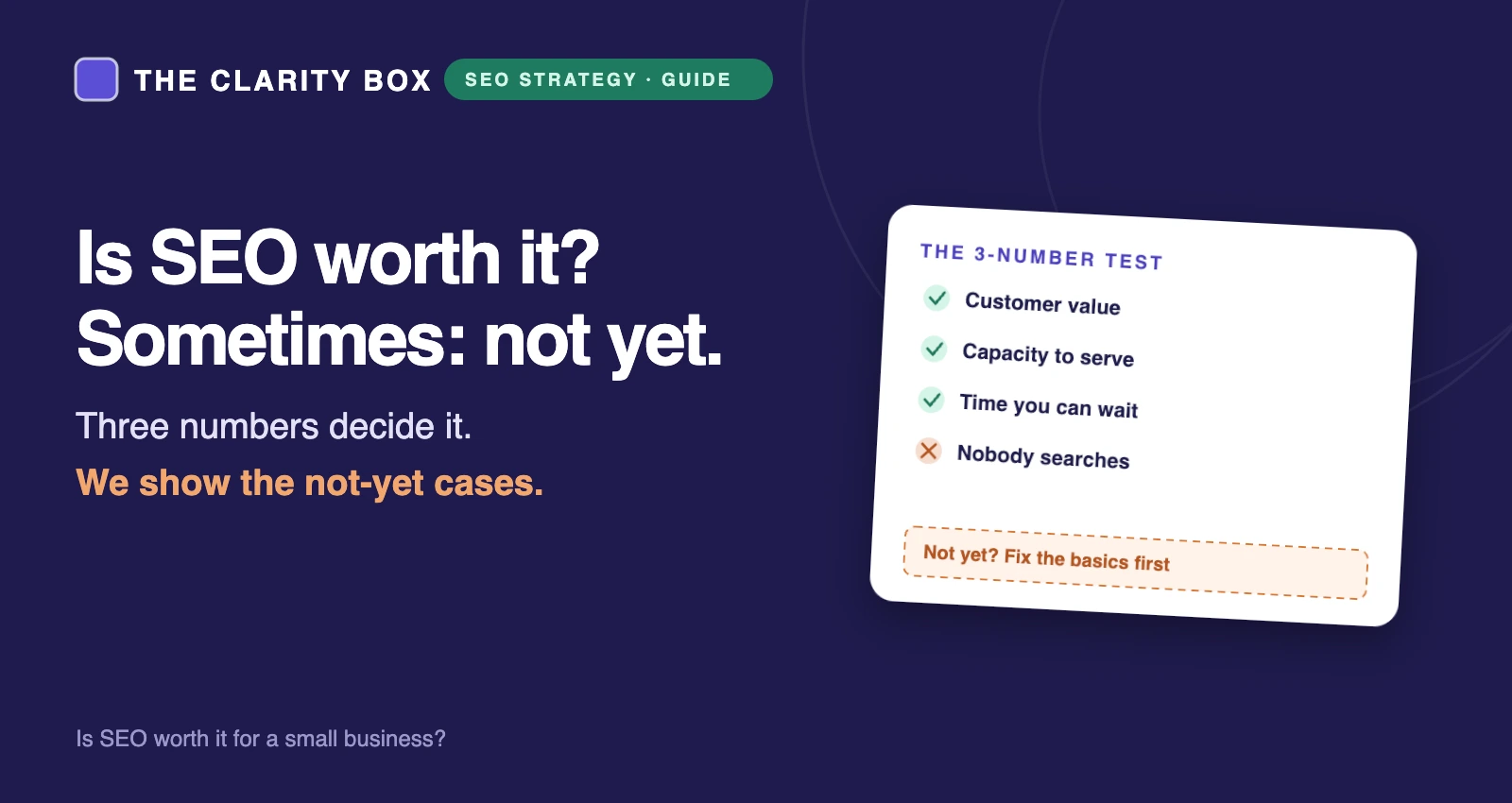
Every small business owner is asked whether to “do SEO”. The honest answer is that it depends on your customers, your capacity and your patience. This guide gives you a way to decide, and says plainly when the answer is not yet.
Key takeaways
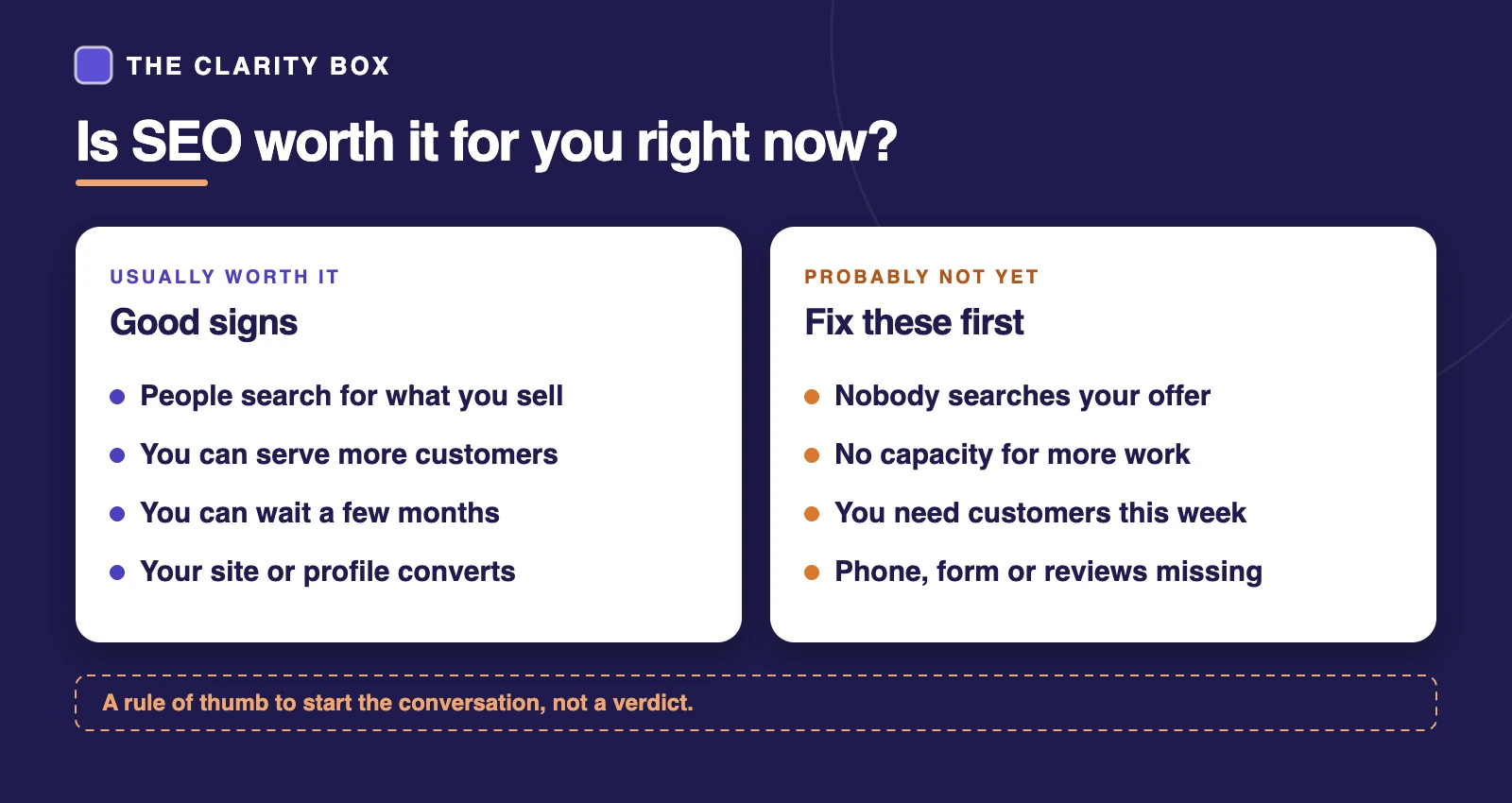
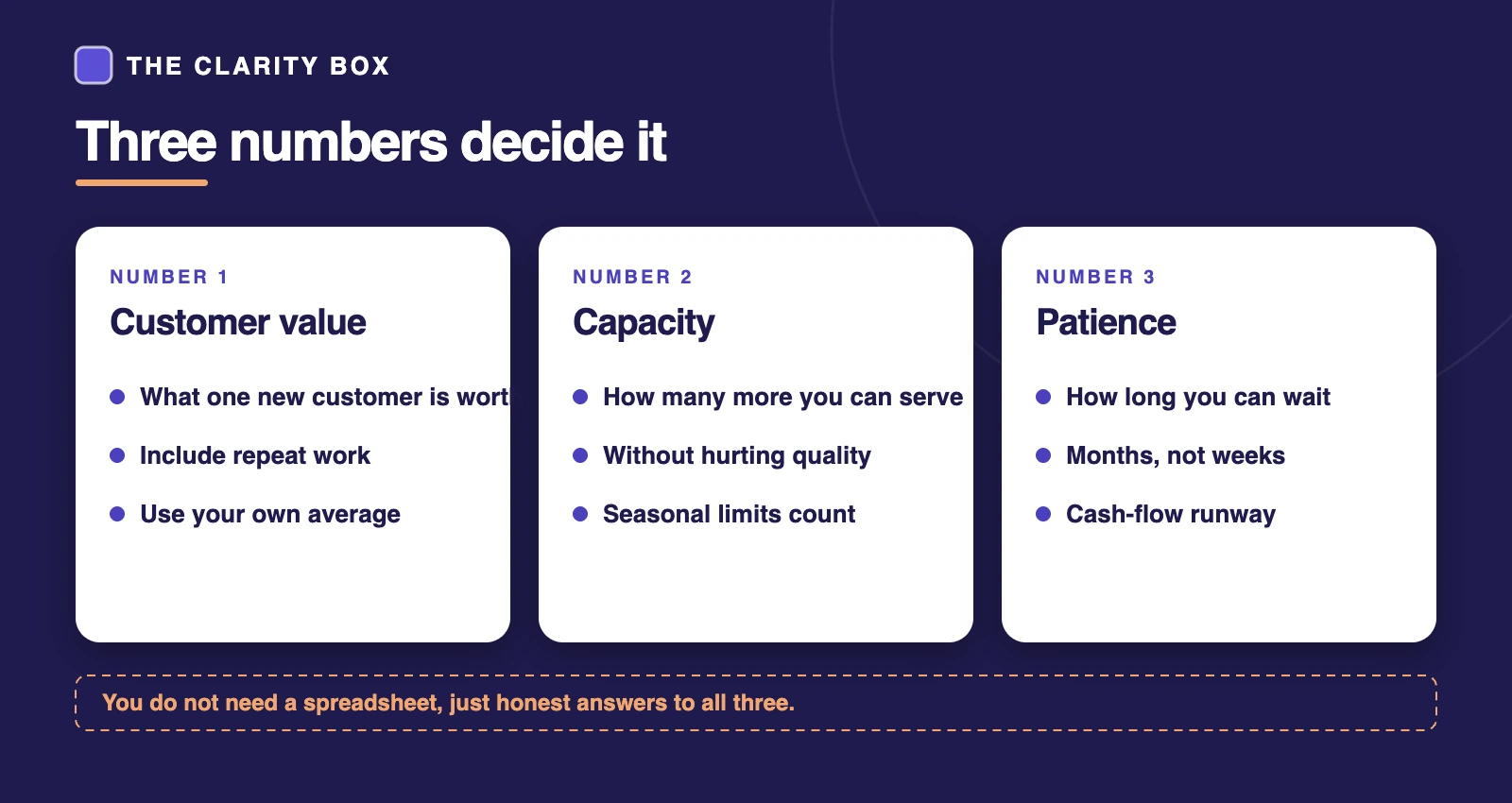
Often, yes. SEO is worth it when customers search for what you sell, when a new customer is valuable to you, and when you can wait several months for results to build. It is not worth it when none of those hold, and a good adviser will tell you so. This article gives you a way to decide for yourself before you spend time or money on anything.
We are an SEO agency, so we have an interest in the answer. That is why the “not yet” cases are set out as plainly as the “yes” cases.
SEO is probably not the right move yet when nobody searches for your offer (for example, a brand-new type of product that people do not yet know to look for), when you are already full and cannot serve more people, when you need customers this month, or when the basics that turn interest into an enquiry are missing. In those cases, fixing the basics first is a better use of effort than any campaign.
SEO puts you in front of people who are already looking for what you do, and its effect tends to build over time rather than stop when you stop. Referrals are valuable but limited by how many people you know. Paid ads can bring customers faster but generally stop when you stop. The right mix is usually not either/or; for example, many small businesses use paid ads for urgency and SEO for steady, lasting visibility.
Look at leading signals first: profile impressions, search terms in Search Console, calls, direction requests and form enquiries. Then look at how many of those turn into customers. Rankings alone are not the point. Set realistic timing with our guide to how long local SEO takes.
Start with the things that help whatever you decide: a complete and accurate Google Business Profile, a clear phone and enquiry path on your website, and a steady, honest review routine. They are useful on their own and they are the foundations of local SEO later. If you serve customers at their location, set up your profile carefully using our guide to ranking a service-area business.
Often yes, and it can move faster, because fewer rivals can mean an earlier lead. It is still worth checking that people actually search for what you do in your area before investing time.
You can, and the basics are within reach: a complete Google Business Profile, a clear website, honest reviews and accurate listings. The trade-off is your time and the learning curve, so it suits owners who can be consistent for months.
Yes, with a changed target. Many AI answers draw on the same trusted pages and profiles that rank well, so good local and content work still helps. Our guide to whether SEO is still relevant in the AI era covers the evidence.
Early signals such as impressions, calls and direction requests can show within a few months, and clearer enquiry growth often takes longer. See our local SEO timeline.
THE CLARITY BOX looks at your demand, your competitors, your profile and your site in a free SEO audit, and tells you plainly whether SEO is worth it for you now or not yet. You can also see our SEO strategy service or start from the homepage.
If you have a quote or a report from one of these firms or any other, we’ll read it with you and show you where your business appears for your main searches.
Saba is an SEO and growth strategist with over 10 years of experience in SEO, content strategy, and digital marketing. She writes about organic growth, content optimization, technical SEO, and AI-powered search, translating complex concepts into practical, data-informed insights that help businesses make smarter marketing decisions.