Google says no special optimisation is needed for AI Overviews, and OpenAI asks you to allow its search crawler. Here is the practical checklist and a simple way to measure results.

SEO & Growth Strategist · 10+ years experience
Share this article
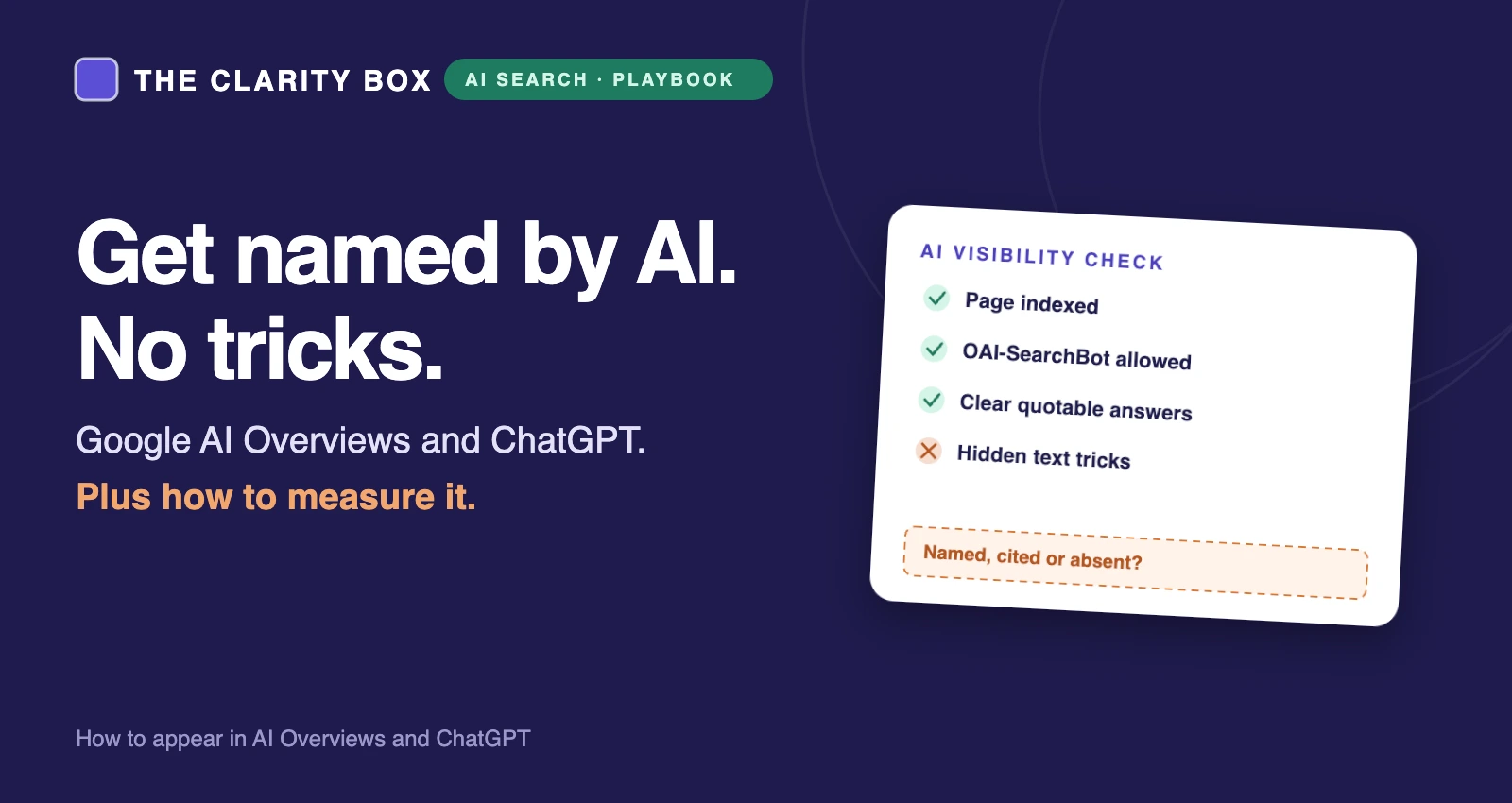
Owners ask how to appear in AI Overviews and ChatGPT. The honest answer is mostly about access, clarity and reputation, not tricks. This playbook uses Google’s and OpenAI’s own documentation and ends with a way to measure it.
Key takeaways
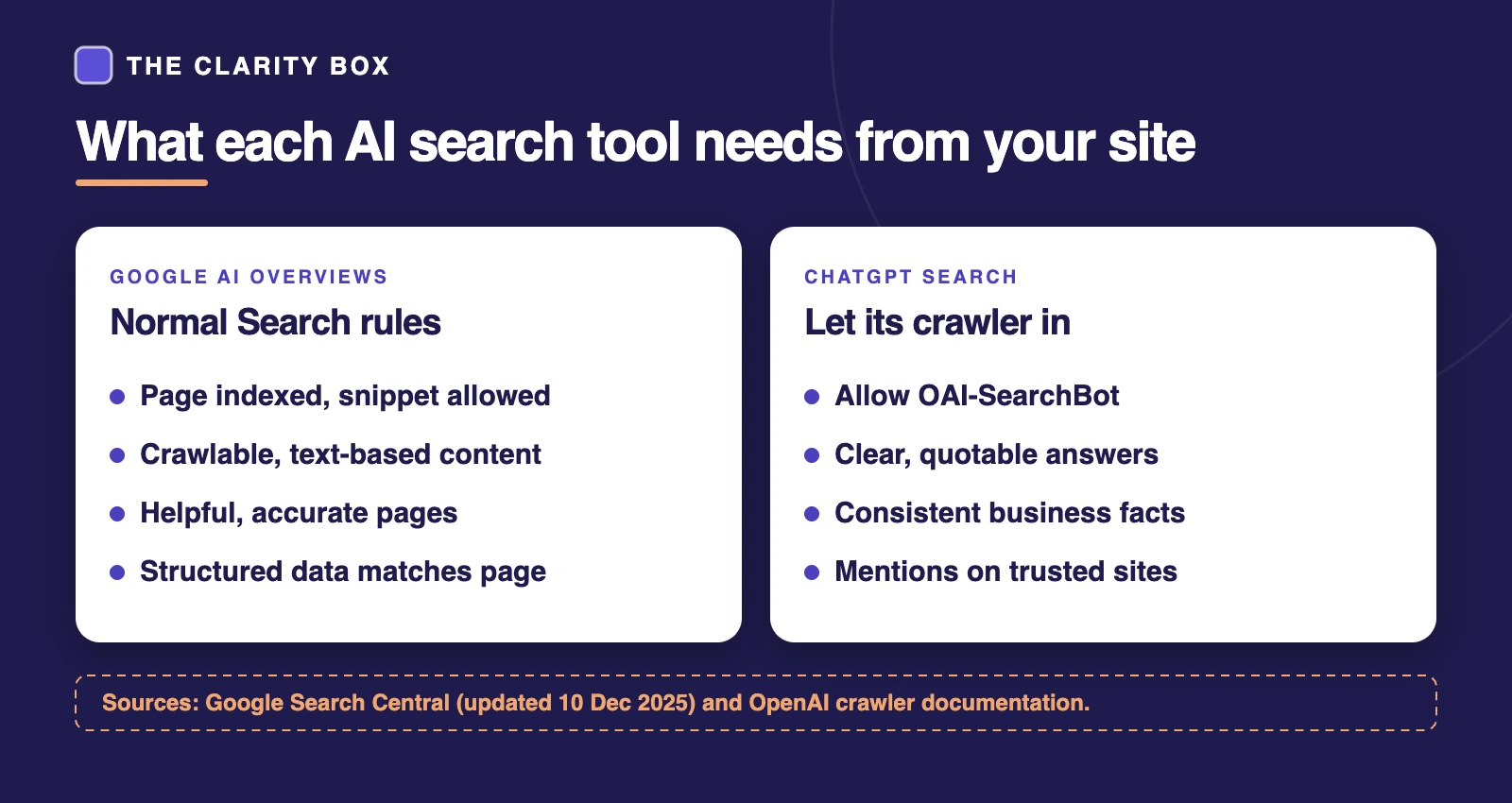
You appear in AI Overviews and AI Mode the same way you appear in Google Search: your page has to be indexed and eligible to show with a snippet. Google’s guidance (last updated 10 December 2025) says there are no additional requirements and no special optimisation is needed. It recommends allowing crawling, linking pages internally, keeping important content in text rather than only in images, and making sure any structured data matches the visible page.
That means the practical work is to be the clearest, most trustworthy answer for the questions your customers ask, which is what SEO has always done.
ChatGPT search draws on web sources. According to OpenAI’s documentation, OAI-SearchBot is its crawler for search, and OpenAI recommends allowing it so your site can appear in results. Sites that opt out will not appear in its search answers, though they may still show as navigational links. GPTBot is a separate crawler tied to training models, so the two can be set differently.
Beyond access, the same things help: clear answers, consistent facts about your business, and being mentioned on other trusted sites. No setting guarantees a mention.
Steer clear of hidden text, mass-produced thin pages, bought reviews and anything sold as an “AI trick”. Google states you do not need new machine-readable files, AI text files or special markup for its AI features. These shortcuts rarely help and can harm your standing. For a calm view of the bigger picture, read our AI search statistics guide.
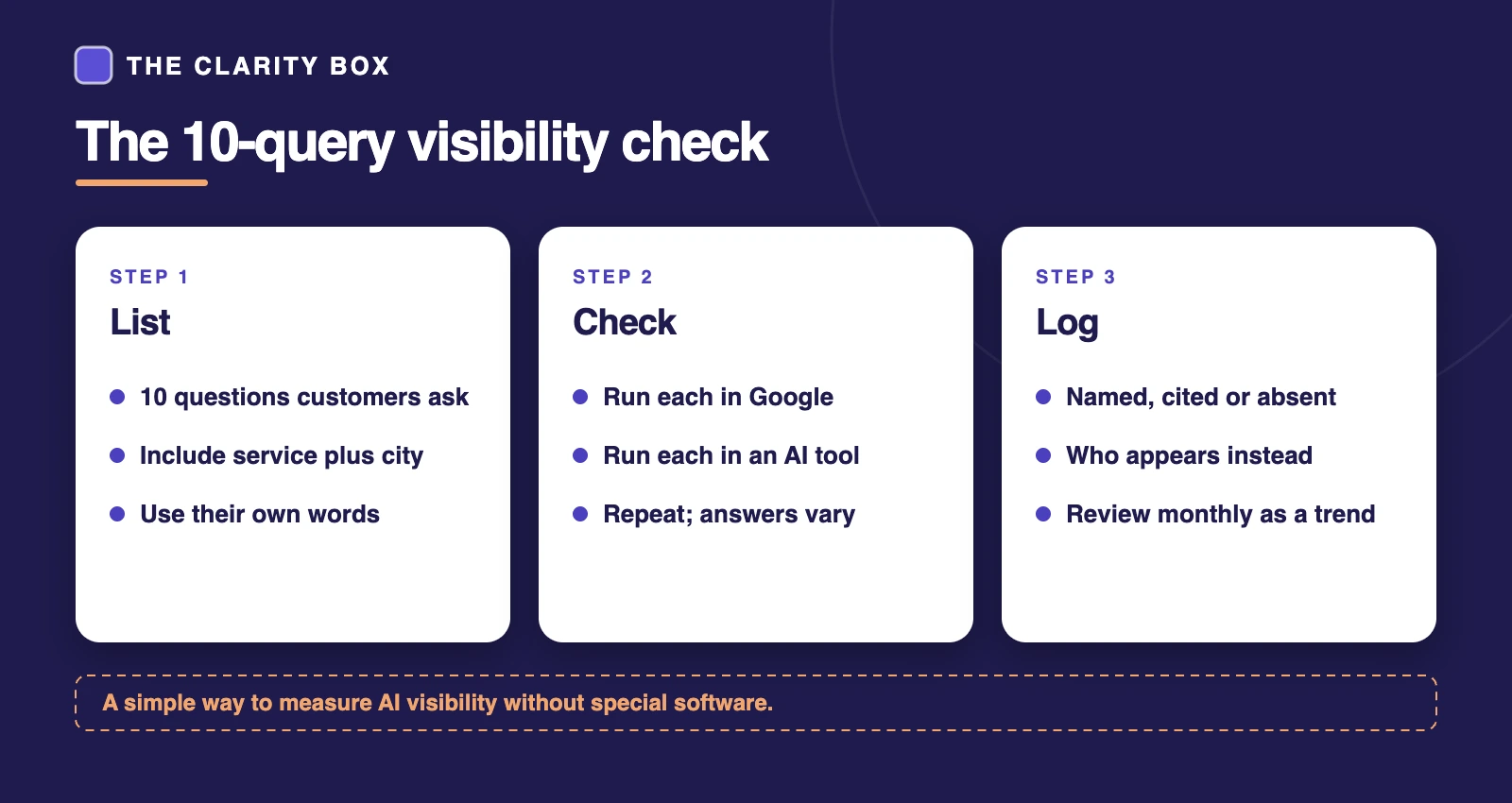
AI answers can change from one run to the next, so measure a pattern, not a moment. Our simple method: list ten questions your customers really ask, including service plus city. Run each in Google and in an AI assistant, and log whether you are named, cited as a source or absent, and who appears instead. Repeat monthly and look at the trend. Add your own enquiry data, such as calls and form leads, to see whether visibility turns into business.
Not for the organic answers discussed here. Appearing depends on your pages and reputation being found and trusted, and nobody can guarantee a mention. Be cautious of anyone who promises one.
It can help systems understand your page, but Google says you do not need special schema for AI features, and structured data must match the visible text. Treat it as good practice, not a shortcut.
Per OpenAI’s documentation, OAI-SearchBot is used for surfacing sites in ChatGPT search, while GPTBot crawls content that may be used to train its models. You can make separate decisions about each in your robots.txt.
There is no fixed timeline. Google AI features depend on normal indexing and trust, which take weeks to months. Track progress with a repeated check rather than a single search.
THE CLARITY BOX checks your presence in Google and AI answers in a free SEO audit. You can also see how our AI search service works, or start from the homepage.
If you have a quote or a report from one of these firms or any other, we’ll read it with you and show you where your business appears for your main searches.
Saba is an SEO and growth strategist with over 10 years of experience in SEO, content strategy, and digital marketing. She writes about organic growth, content optimization, technical SEO, and AI-powered search, translating complex concepts into practical, data-informed insights that help businesses make smarter marketing decisions.