The seven fixes, in order, that help clients find your firm on Google, plus the law society advertising rules to check first.

SEO & Growth Strategist · 10+ years experience
Share this article
As of November 13, 2026. Local search features change; check the live rules before you act.
Key takeaways
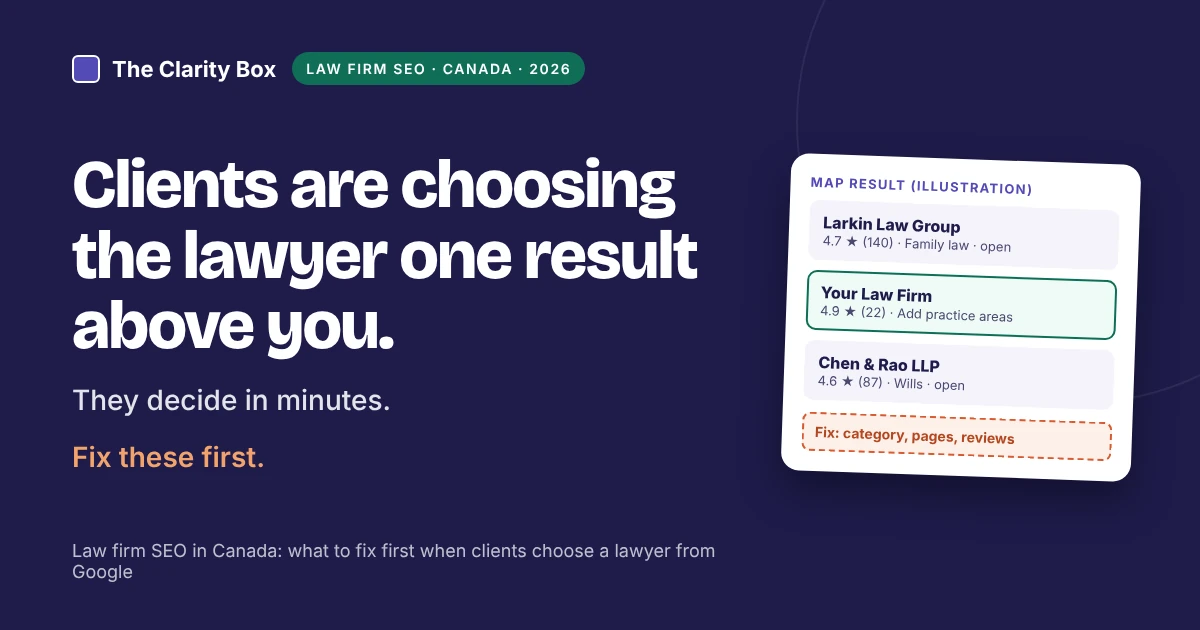
A person with a legal problem is usually stressed, short on time, and unsure what kind of lawyer they need. They search for the problem (“separation lawyer Mississauga”, “wills lawyer near me”), open two or three results, and call or fill in a form. They are comparing clarity, not cleverness.
That has a practical consequence. The firm that explains in plain language who it helps and what happens in the first conversation tends to win over the firm with the longer list of services. Reviews matter as well. BrightLocal’s Local Consumer Review Survey 2026 (1,002 U.S. adults, published February 11, 2026) found that 97% read reviews for local businesses and 68% only consider businesses rated four stars or higher. That sample is American and not specific to legal services, so read it as direction, not as a Canadian number.
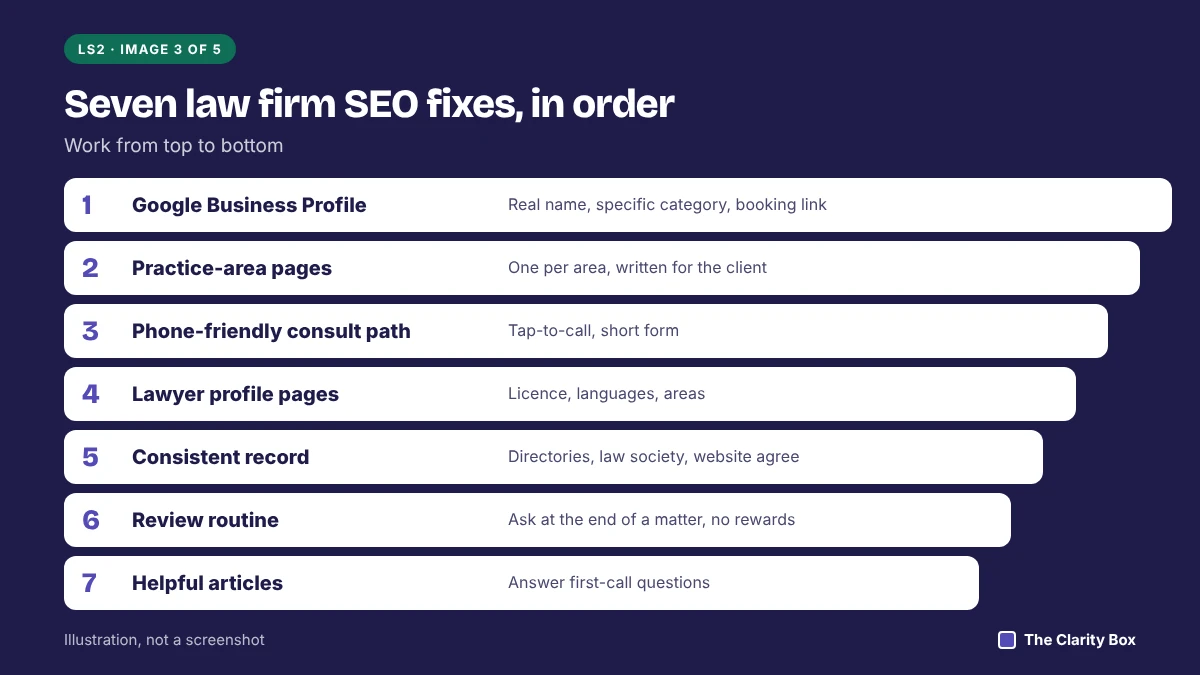
| Priority | Fix | Why it comes first | How to check it yourself | Effort |
|---|---|---|---|---|
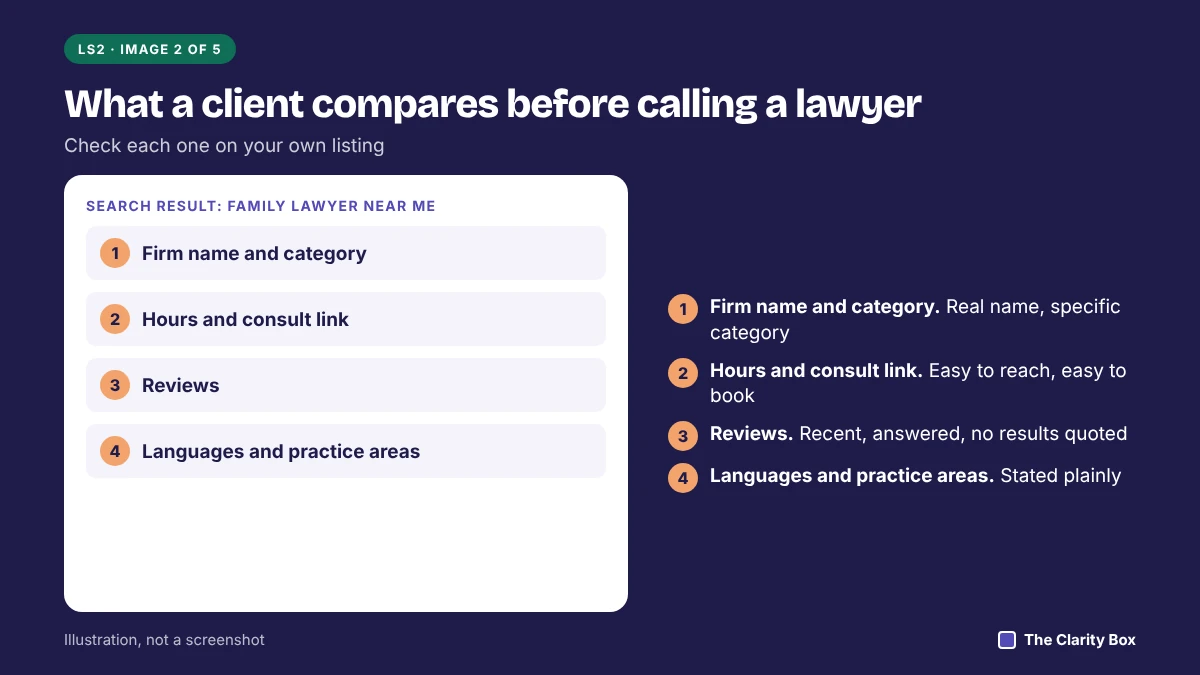
| 1 | Google Business Profile: real firm name, the most specific primary category (for example “Law firm” or the practice category that fits), hours, and consultation booking link | The profile is what appears in the map result. Whitespark’s 2026 Local Search Ranking Factors survey (47 experts, published November 6, 2025) lists Business Profile signals among the strongest for map results | Search your firm on google.ca in a private window | Low |
| 2 | One page per practice area, written for the client’s situation | A client with a specific problem lands on the page that matches it | Search “[practice area] lawyer [city]” and see which of your pages loads | Medium |
| 3 | A consultation path that works on a phone: tap-to-call, short form, clear next step | Many searches happen when the person is away from a desk | Try booking from your own phone | Low |
| 4 | Lawyer profile pages with licence details, languages, practice areas, and admission year | Clients and Google both look for who is behind the firm | Compare each lawyer page with the law society listing | Medium |
| 5 | A consistent record across directories, the law society listing, and your site | A mismatch weakens trust. Law Times (April 12, 2026) reported on keeping directory and profile details consistent and on not buying awards | Make a list of every place the firm appears | Medium |
| 6 | A review routine that respects the rules: ask every client at the end of a matter, never offer anything in return, never quote a result | Reviews are readable by every prospect | Count reviews from the past 90 days | Medium |
| 7 | Helpful articles answering the questions clients ask on the first call | Supports practice-area pages with real answers | List the five questions you hear most | High |
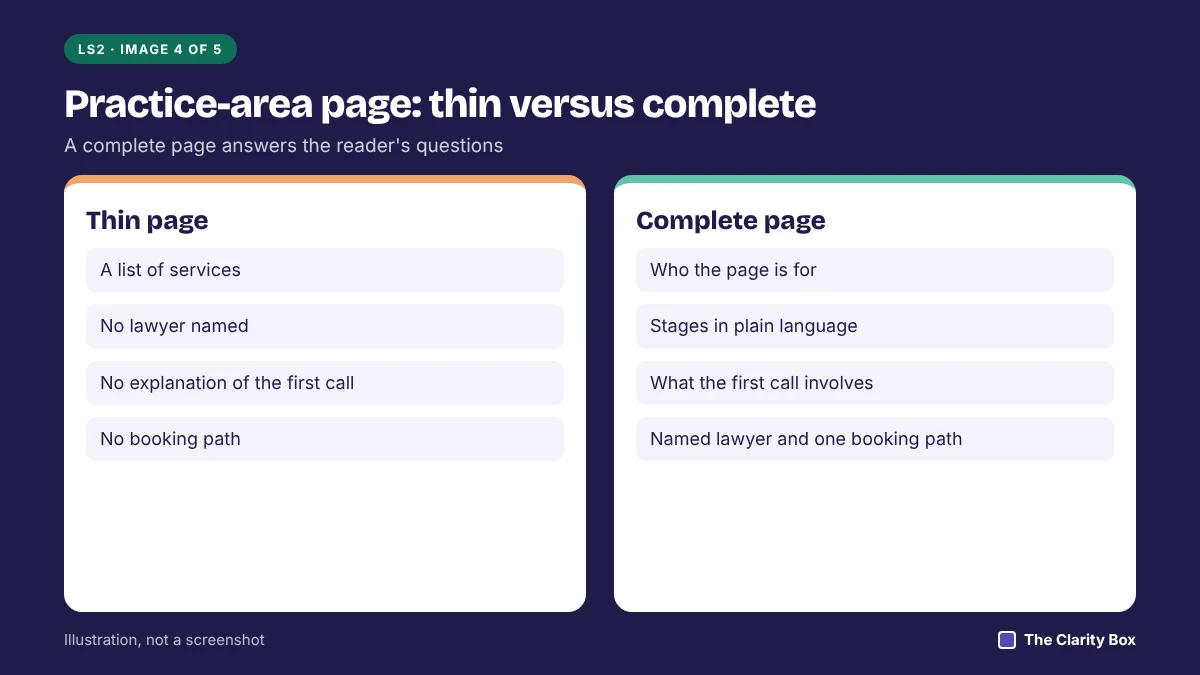
A practice-area page should read like the first five minutes of a good consultation. Use this structure:
Do not copy another firm’s page. Duplicated text is a spam signal and a trust problem, and each firm’s process is different.
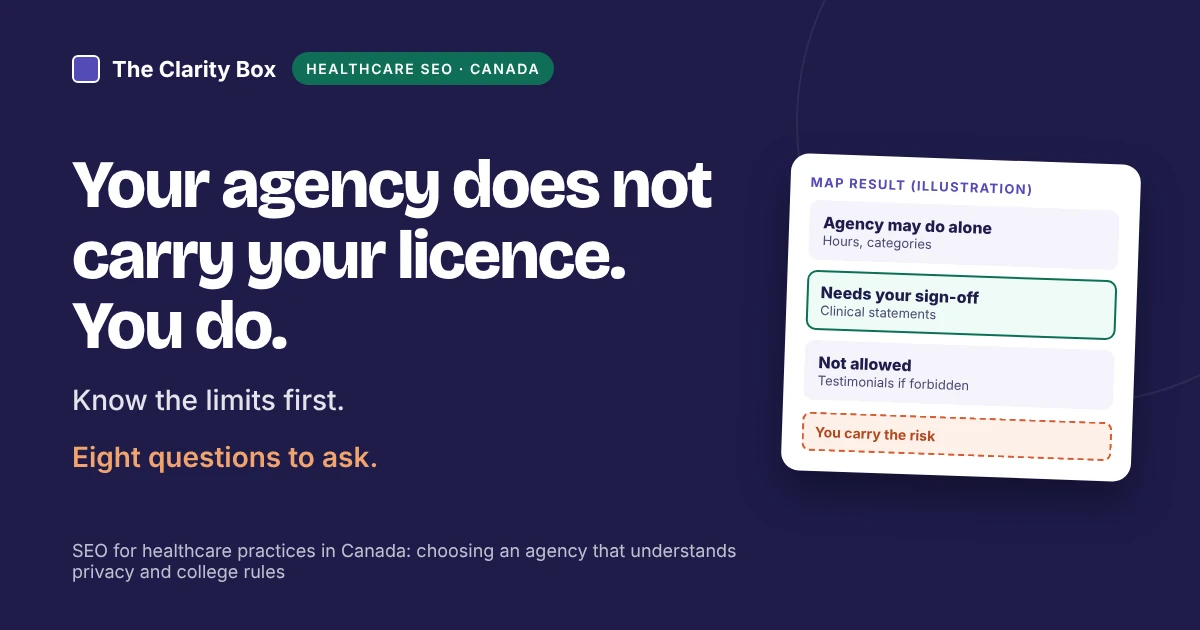
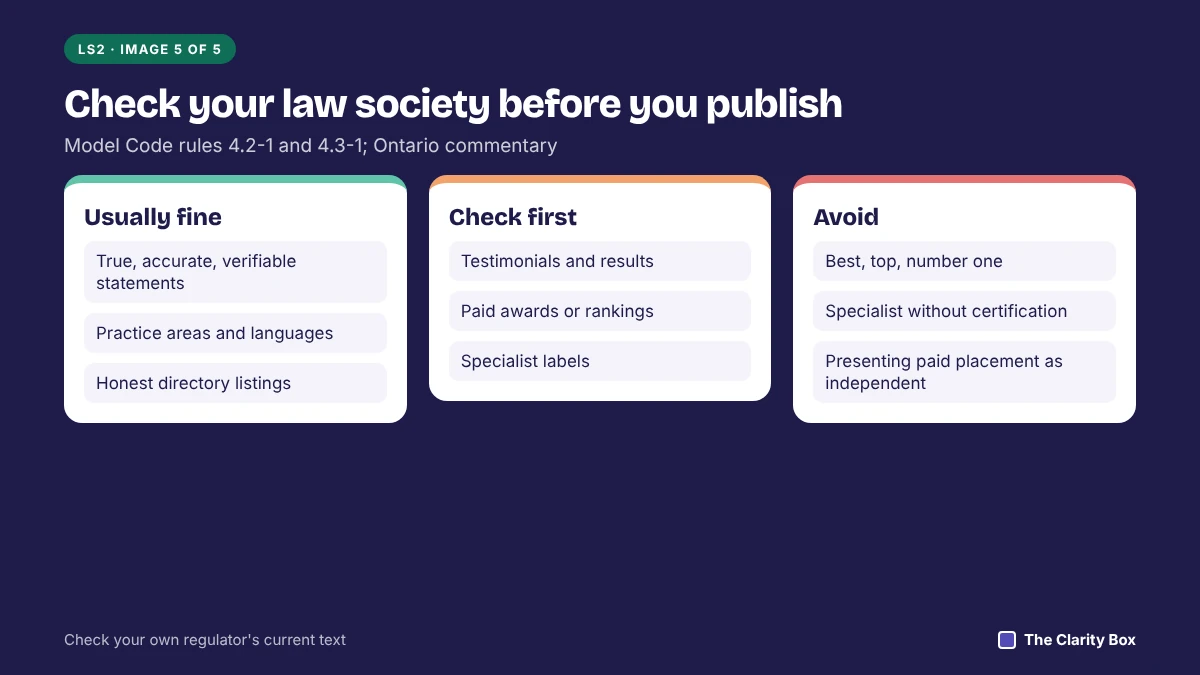
Law societies regulate lawyer advertising in each province. The Canadian Bar Association’s Model Code of Professional Conduct, which provincial codes are built on, says marketing should be demonstrably true, accurate, and verifiable, and that a lawyer should not claim to be a specialist unless certified as one. Ontario’s commentary goes further on superlatives such as “best” or “number one” and expects rankings to be genuine.
In practice this means:
These are reasons to read your law society’s current text, not reasons to avoid marketing.
This is a marked block: the rules differ by province, and we only state what we verified.
On the first page of google.ca for this topic (Canada-targeted results, not city-level, checked November 2026) most results are agency guides or agency-written lists. Few mention law society rules, several are undated, and none gave a ranked order of fixes with a self-check. This guide gives that order and puts the advertising rules where a firm will see them. If you want this done for your firm, see our local SEO service and our SEO for law firms page, or read our Google Business Profile questions, answered.
Generally yes, but check your law society’s rule on testimonials. Never offer an incentive and never quote a result in a reply. If a review is fake or unfair, here is how to remove a fake or unfair Google review.
The profile can improve within weeks. Practice-area pages and reviews build over months. A date promise is a guess. For realistic timelines, see how long local SEO takes.
Not first. Practice-area pages and the profile come first; articles support them.
Only if Google’s practitioner guidance fits your case. Read the live guidance before you create one.
Only if your law society has certified you in that area.
If you do, label them honestly. Don’t present a paid placement as an independent ranking.
If you want the seven rows above checked against your own firm, THE CLARITY BOX will send a written list of what to fix first.
Saba is an SEO and growth strategist with over 10 years of experience in SEO, content strategy, and digital marketing. She writes about organic growth, content optimization, technical SEO, and AI-powered search, translating complex concepts into practical, data-informed insights that help businesses make smarter marketing decisions.