How Canadian agents and brokerages can win neighborhood searches with pages, a Google profile and reviews they own, plus the council rules to check.

SEO & Growth Strategist · 10+ years experience
Share this article
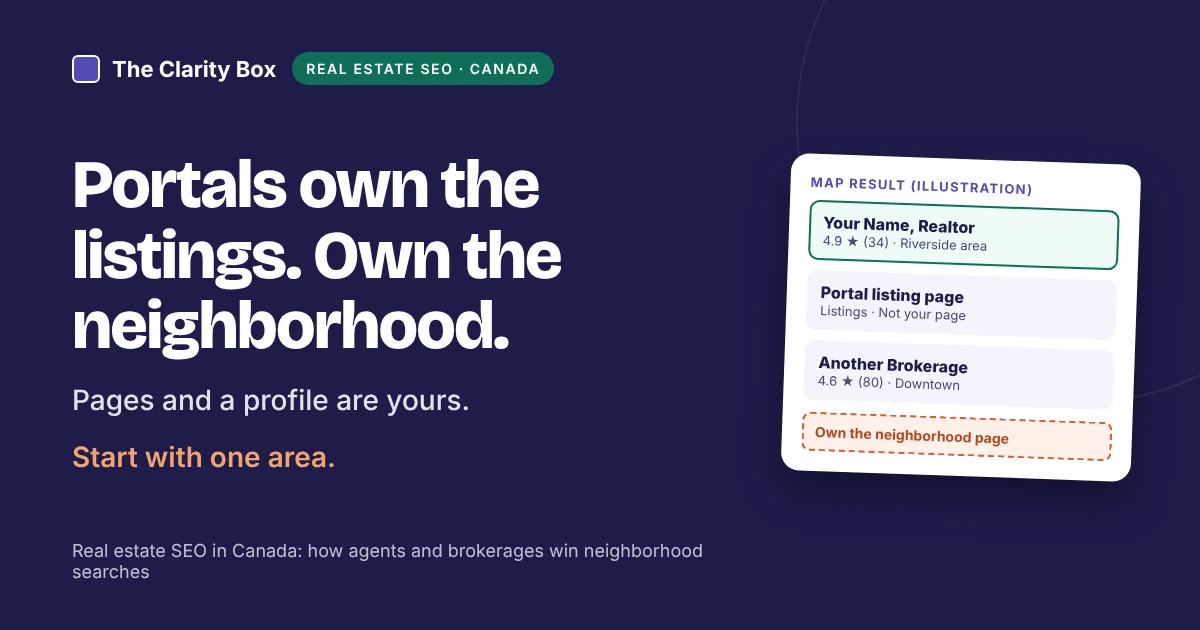
Portals own the listing searches, but neighborhood searches are open to agents who publish something real. This guide shows what to build and which council rules to check. As of November 13, 2026.
Key takeaways
People thinking of buying or selling search by area: “[neighborhood] realtor”, “homes for sale in [neighborhood]”, “moving to [city]”. Portals dominate listing searches, but the area-guide and agent-profile searches are open to agents who publish something real.
The approach is slower than buying leads, and it carries a different kind of control: the pages, the profile, and the reviews belong to you, and they keep working after you stop paying for anything.
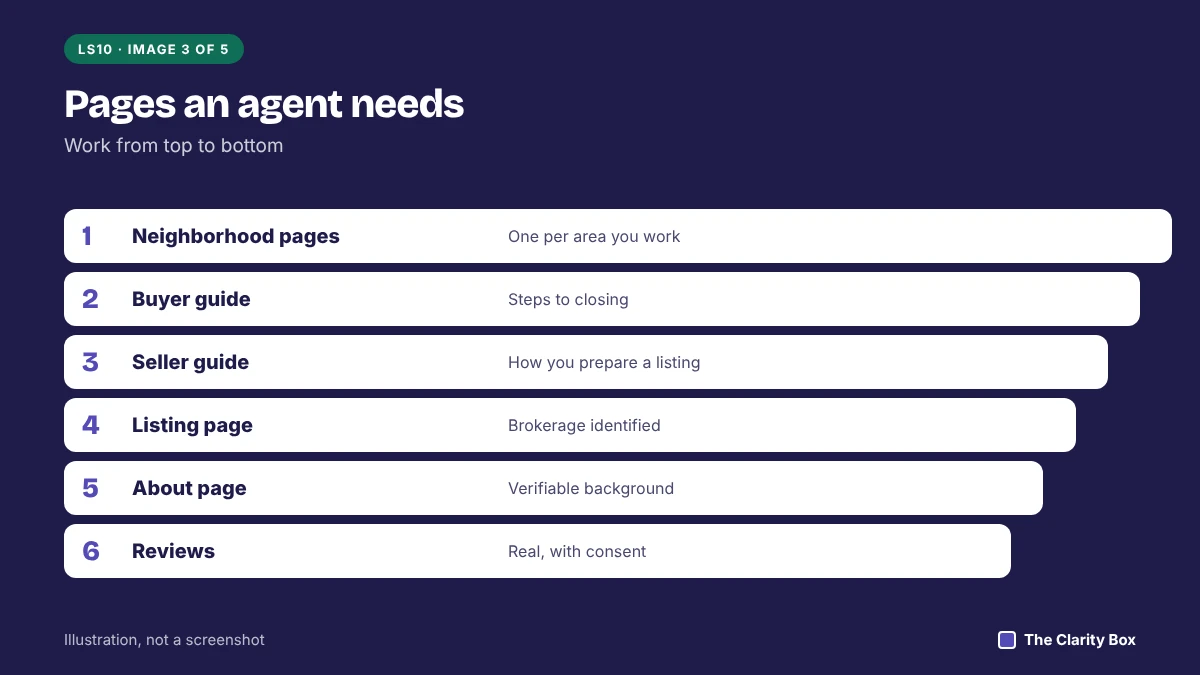
| Page | What it holds | Check |
|---|---|---|
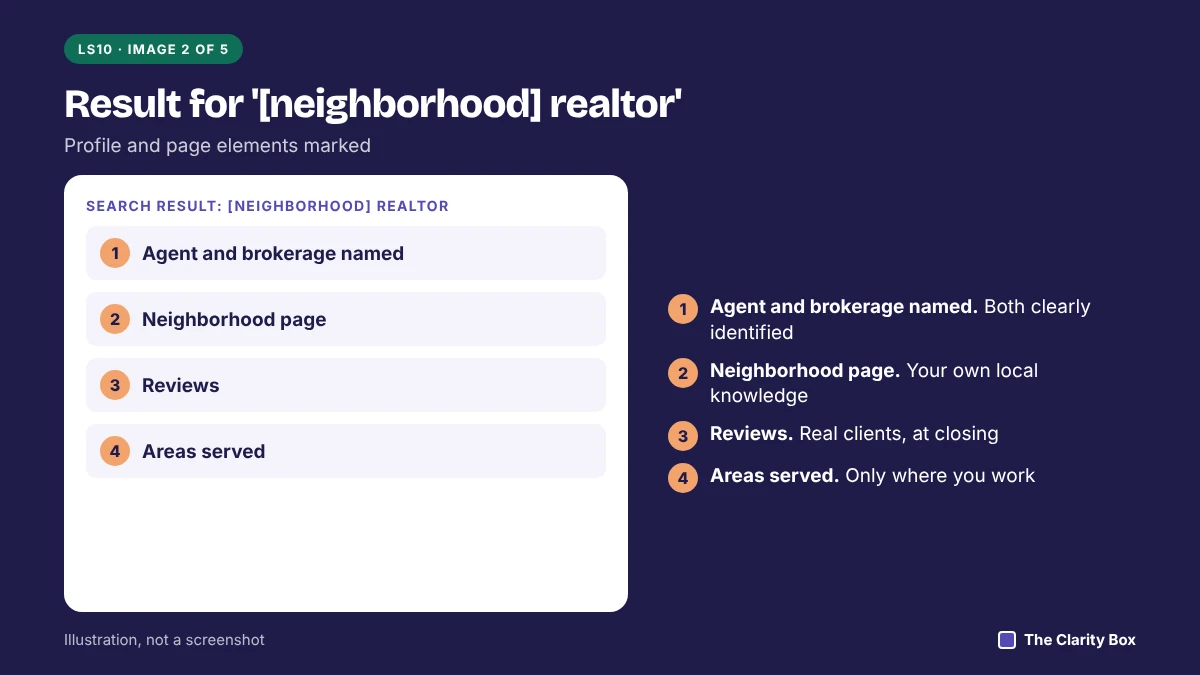
| Neighborhood page (one per area you work) | Who the area suits, housing types, commute and transit, schools with source links, parks and services, and your recent activity there | Search “[neighborhood] realtor” and see whether it appears |
| Buyer guide for the area | Steps from search to closing, what to prepare, how you work | Does it answer the first call’s questions? |
| Seller guide for the area | How you prepare a listing, what the process looks like | Same |
| Listing page | Property details, photos you have the right to use, your identity and brokerage | Is brokerage identification visible? |
| About page | Your background, designations, areas, languages | Can a visitor verify it? |
| Reviews page | Links to reviews you did not write | Are they real and attributed with consent? |
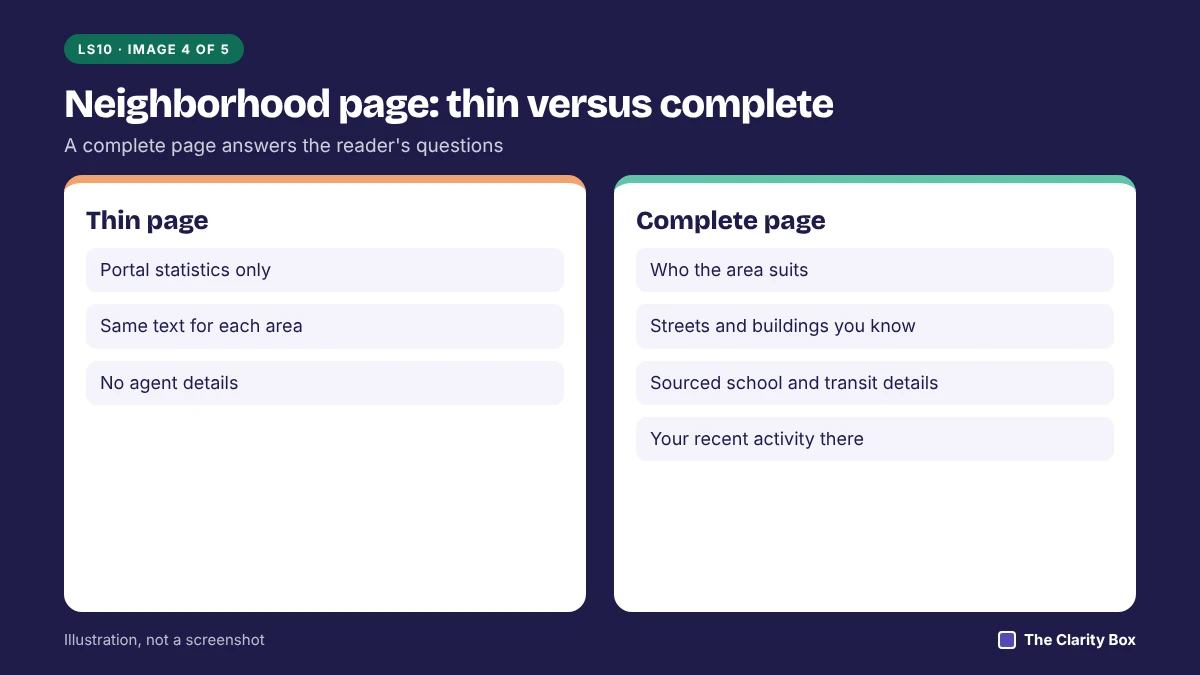
Write each neighborhood page from your own knowledge: streets you know, buildings you have sold in, and questions clients actually ask. A page that only repeats statistics found on a portal adds nothing, and the same text with a different neighborhood name is treated by Google’s spam policies as scaled, low-value content.
If you meet clients at an office, you can list the address. If you meet them elsewhere, Google’s service-area guidance lets you hide the address and list areas. Use your real name or brokerage name, a specific category such as “Real estate agent”, real photos, and accurate hours. Keep the profile consistent with your website and with your council registration. For more, see Local SEO and Google Business Profile questions.
Ask each client at closing, send a direct link, and reply to every review. Don’t offer gifts for reviews. In the BrightLocal Local Consumer Review Survey 2026 (1,002 U.S. adults, published February 11, 2026), 97% of respondents said they read reviews for local businesses and 74% only consider reviews from the last three months. That is an American sample and not specific to real estate.
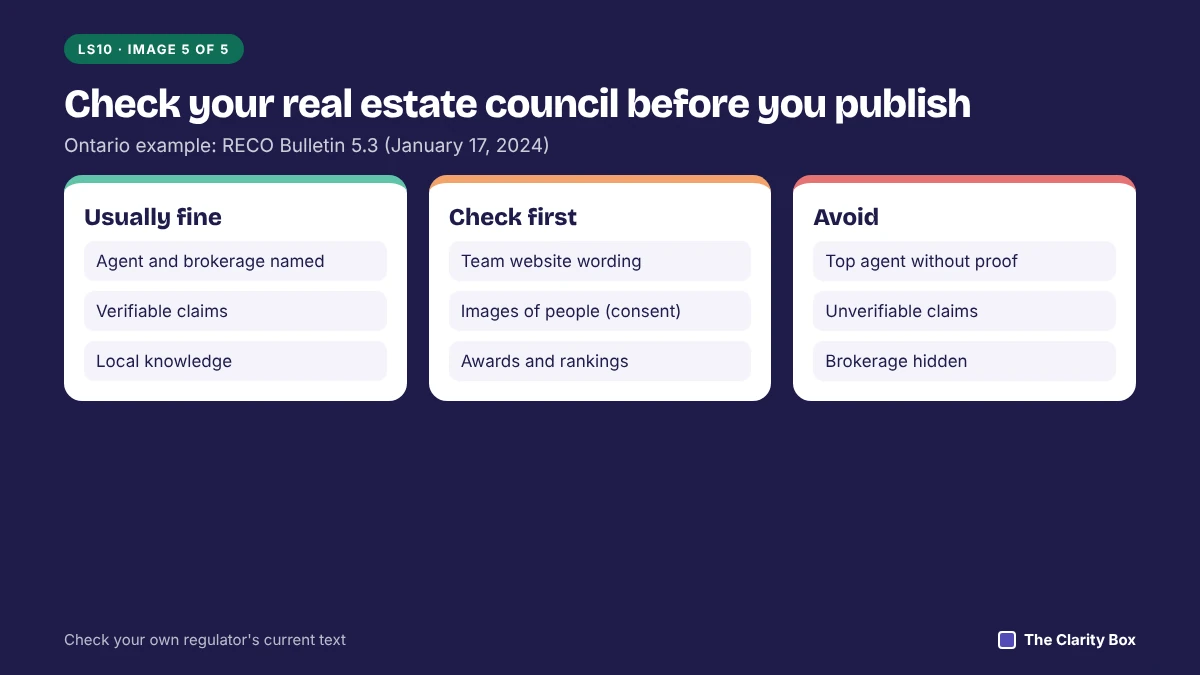
Regulators set rules for how you present yourself. Using Ontario as the worked example, RECO Bulletin 5.3 (January 17, 2024) says:
That affects neighborhood pages (who is shown), your profile (name and brokerage), and your headlines (superlatives).
On the first page of google.ca (Canada-targeted results, not city-level, checked November 2026) many guides are agency pages written for U.S. agents. They rarely mention Canadian council rules, and they often push portal listings instead of pages the agent owns. This guide adds the council layer and a neighborhood-page method. See also local SEO and SEO for real estate agents.
Not first. Neighborhood pages and the profile come first.
Only those you actually work in.
Only if you have the right to.
In Ontario a team site counts as a brokerage website, so check with your brokerage.
Profile changes can show in weeks; pages and reviews take months. See how long local SEO takes.
That is a separate decision; compare them on control, speed, and effort.
Want your neighborhood pages and profile checked? THE CLARITY BOX will send a written list of what to fix first.
Saba is an SEO and growth strategist with over 10 years of experience in SEO, content strategy, and digital marketing. She writes about organic growth, content optimization, technical SEO, and AI-powered search, translating complex concepts into practical, data-informed insights that help businesses make smarter marketing decisions.